Grant Application Season Coming Soon for Caltrans’ 2018 HSIP Cycle 9

2018 Highway Safety Improvement Program Cycle 9 (Caltrans)
For over 10 years, TJKM has been assisting our clients throughout California in preparing for, applying for, and implementing projects through the Highway Safety Improvement Program (HSIP). The HSIP program was created in 2005 with the signing of the Safe, Accountable, Flexible, Efficient Transportation Equity Act: a Legacy for Users (SAFETEA-LU) federal transportation funding and authorization bill. The HSIP program sets aside federal funds to be distributed through state transportation departments for the purpose of constructing transportation infrastructure that will reduce traffic fatalities and serious injuries on public roads. The HSIP program in California and nationwide has been highly successful, and has been renewed in each federal transportation spending bill since 2005’s SAFETEA-LU (2012’s “MAP-21” and 2016’s “FAST Act”).

In California alone, the HSIP program has provided over $860 million towards the construction of $1,030 million in local transportation safety projects in rural and urban areas. The availability of these funds can often make a world of difference for our clients. When budgets are tight, and competing infrastructure priorities force agencies to make difficult decisions when allocating limited local resources, HSIP and other competitive grant programs can be a boon to public works and planning departments. As part of our commitment to improving the safety and mobility of California’s streets and highways, TJKM offers assistance with the preparation of HSIP grant applications. These grant applications require detailed technical analysis, creative solutions, reliable cost estimates, and community support.

With busy schedules, it is often a scramble to prepare these and other competitive grant applications in time for deadlines. The 2018 HSIP Cycle 9 program is just around the corner. The call for projects will be announced in the coming weeks, with an August 31, 2018 application deadline. If your agency needs any help identifying projects eligible to improve safety in your county, town, or city, contact TJKM at (925) 463-0611 today – we will immediately run a collision record analysis to determine whether a safety project could be implementable and competitive.

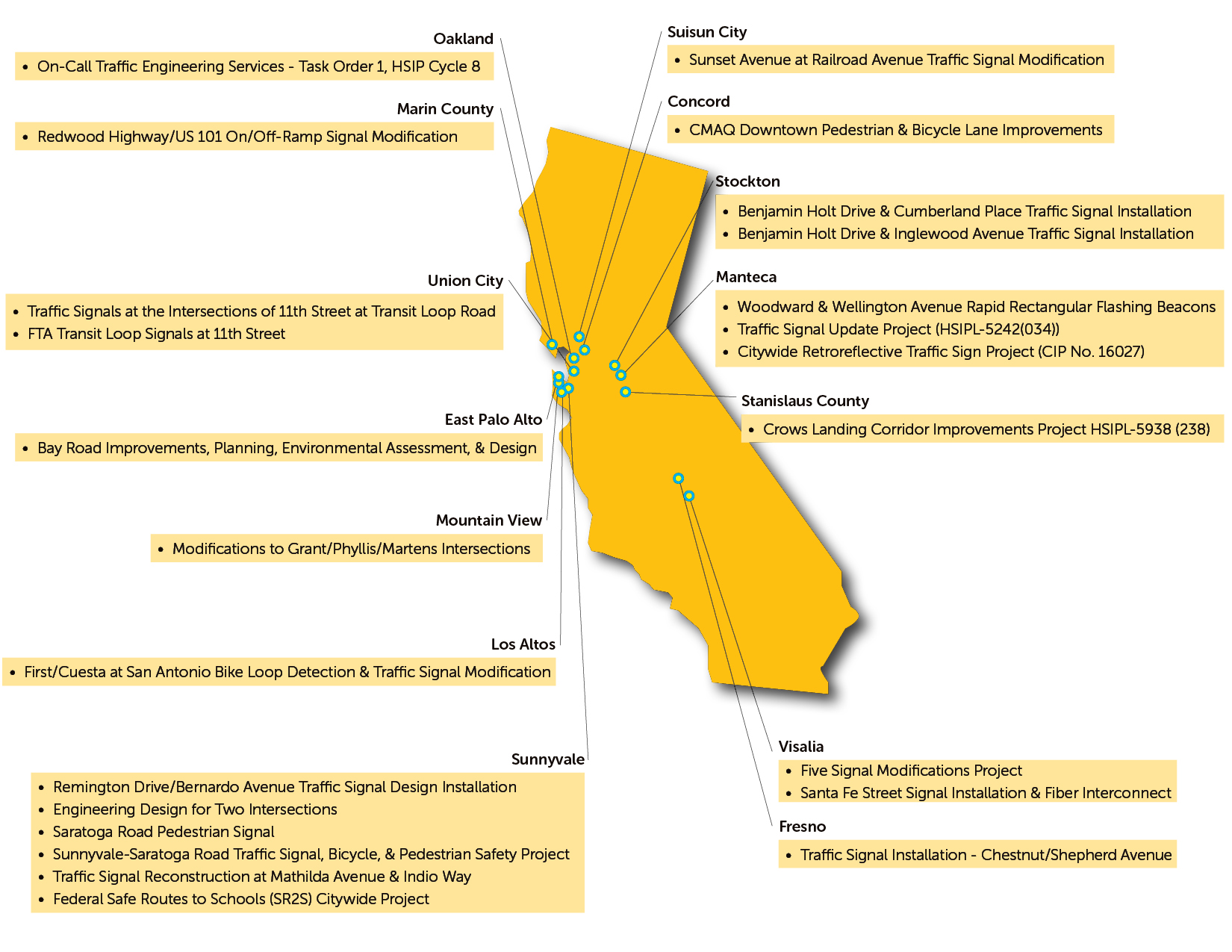
Once an agency has been awarded an HSIP grant for their application, TJKM has assisted the agency through different phases of the project. All of these projects require coordination with Caltrans Local Assistance Program for E-76 Authorization for Construction permit approval. The level of TJKM’s involvement has varied depending on the client. On some of these projects, TJKM has assisted the local agency with the completion of the Request for Authorization to Proceed package to Caltrans Local Assistance for Preliminary Engineering authorization and E-76 permit authorization for construction funds, as well as prepared close out Caltrans forms for cities after construction is completed. We are familiar with the processes used to satisfy a variety of funding sources, and can draw upon our back-ground and extensive experience to satisfy all the procedures and processes of this project. Some of the recent HSIP funded design projects our team has completed, or are currently ongoing, with federal funds are outlined in the map below:
Experience-HSIP-Map

What about SSARP?

In 2016, Caltrans created the Systemic Safety Analysis Program (SSARP) to complement the existing HSIP program. Unused HSIP funds were allocated to this forward-looking program to help anticipate and prevent future fatal and severe crashes.

Whereas the HSIP program is designed to correct locations that experience high crash rates today, SSARP is designed to identify safety projects predictively, based on a systemic analysis of past crash patterns and trends on other similar facilities.

Priority safety projects identified in agency SSARP studies will be “grant-ready” when the next HSIP Cycle rolls around. The SSARP program is new this year, but is likely to stick around – If your agency has any questions about SSARP, contact TJKM today at (925) 463-0611 to learn about how we can help your community plan for the next HSIP.

LAVTA/Dublin Transit Performance Initiative/Next Generation Arterial Operation Program Project Evaluation

Dublin, CA
Metropolitan Transportation Commission (MTC), the regional metropolitan planning organization for the nine counties in the San Francisco Bay Area, launched the Next Generation Arterial Operation Program (NGAOP) in 2014 which focused on Intelligent Transportation System (ITS)-based strategies to improve arterial operations. Similar to the NGAOP, MTC also initiated the Transit Performance Initiative (TPI) Program, which provides financial aid to help agencies implement quick measures to improve transit operations, customer service, and ridership on major transit corridors and systems. The two programs share a common goal of improving traffic flow and transit service along busy arterials.
LAVTA-Dublin-Project-Eval_FINAL-REPORT_Jan-2018
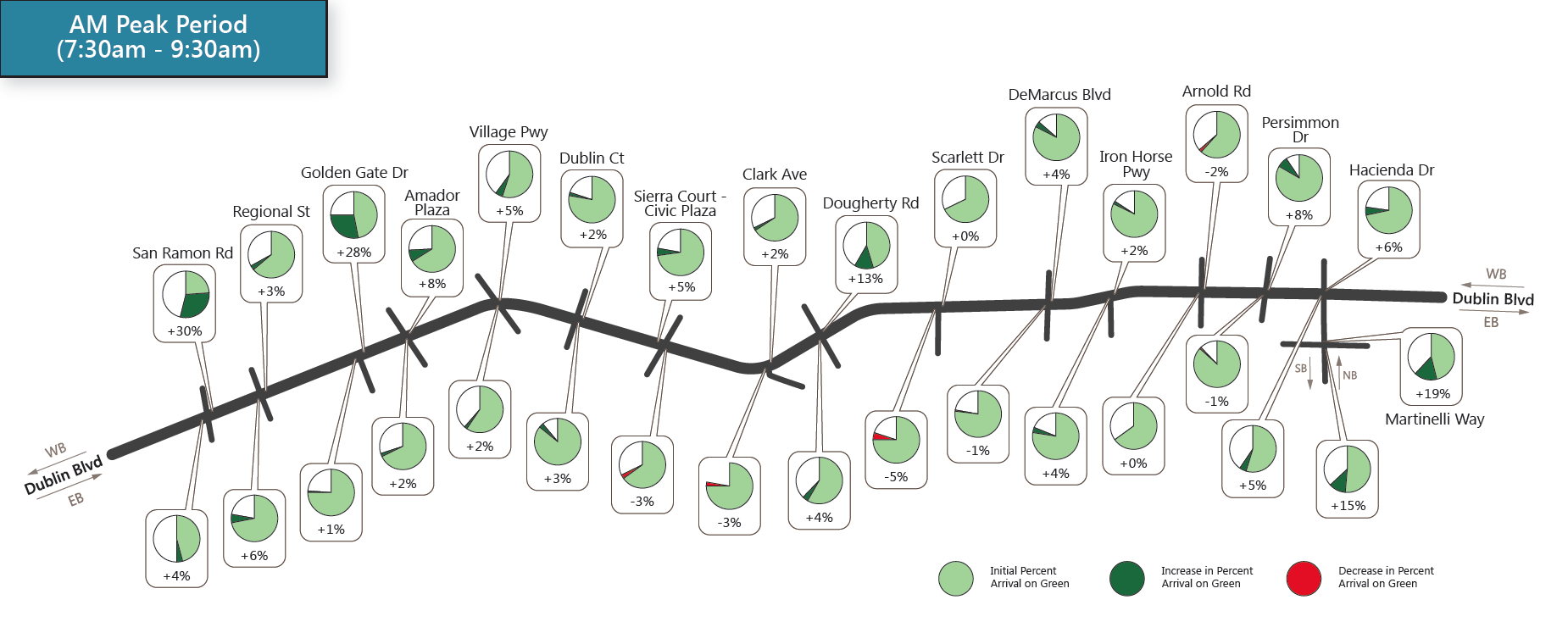
One project selected for the TPI/NGAOP program was to implement ITS strategies along Dublin Boulevard, a major corridor in the City of Dublin, comprising of 17 intersections in the study area. The ITS strategies selected for this corridor included an adaptive traffic control system (ATCS), bus queue jumps, transit signal priority (TSP), bicycle detection, and transit real-time passenger information system.

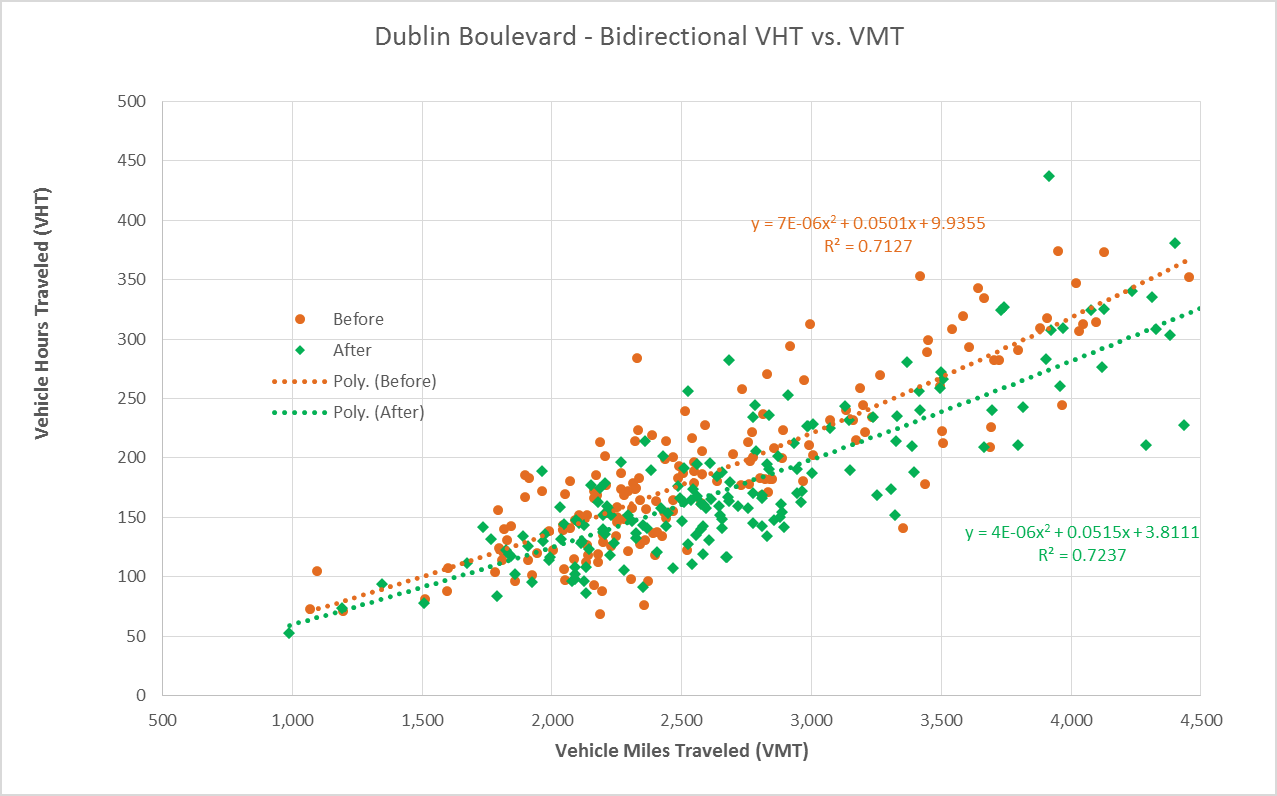
TJKM assisted MTC with a comprehensive evaluation to understand if the implementation of the project meets project and agency objectives. Performance measures used in the evaluation included travel time, travel time reliability, vehicle hours traveled (VHT) and vehicle miles traveled (VMT), minor street efficiency, smooth flow (or Purdue Coordination Diagrams), fuel consumption, and greenhouse gas (GHG) emissions. A thorough benefit/cost (B/C) analysis was also performed, taking into consideration the benefits of the system, initial investment, staff time spent during deployment/implementation phase, and ongoing system operations and maintenance costs. The impact on agency resources, such as agency staff resource needs, training, ease of use, and number of public complaints, were also evaluated. A benefit-cost analysis revealed a benefit to cost (B/C) ratio of 8.9:1 for this project.

LAVTA-Dublin-Project-Eval_AM-peak-hr

“A benefit-cost analysis revealed a benefit to cost (B/C) ratio of 8.9:1 for this project.”

Belmont Pedestrian & Bicycle Plan

Belmont, CA

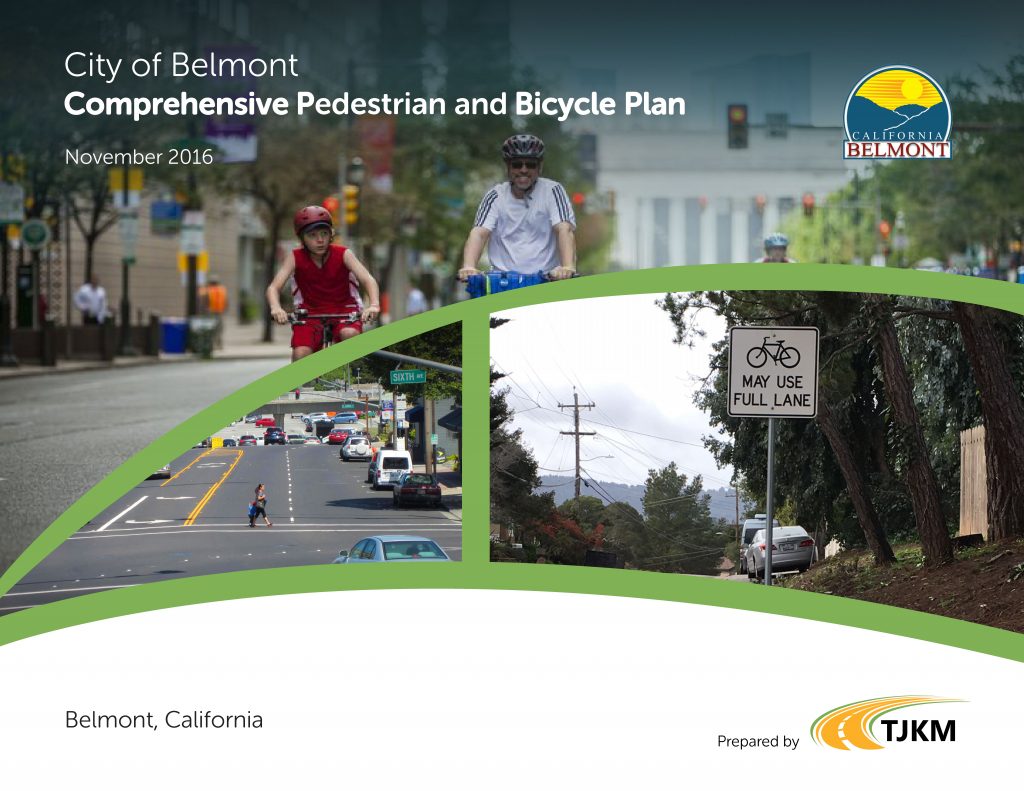
TJKM assisted the City of Belmont in developing its first citywide active transportation plan. The goal of the plan is to create a safe, comfortable and bicycle/pedestrian friendly environment that will encourage people of all ages to bike or walk more, enhance access to destinations, and support the City’s Complete Streets Policy. The major steps in the development of the Plan included:

Assessment of existing conditions including bicycle and pedestrian counts, inventory of current pedestrian and bicycle facilities and review of collision history involving pedestrian and bicycles in the City.
Public outreach including an online resident survey, establishment of a stakeholder advisory group and public meetings.
Identification of priority pedestrian and bicycle projects based on identified needs.
TJKM prepared a thorough review of existing bicycle, pedestrian, and Safe Routes to Schools planning documents. TJKM conducted public outreach via walking/biking tours, online surveys and advisory committee meetings. TJKM developed Belmont’s first citywide bikeway network map, recommended pedestrian priority segments, prepared cost estimates and identified a phased list of capital improvement projects.The adopted plan document prepared by TJKM can be viewed on the City of Belmont website.

As part of a separate hiring process, TJKM was subsequently selected by the City to prepare construction drawings for Phase I of the Ralston Avenue Corridor bicycle and pedestrian improvements that will provide critical links along and across the eastern half of the City’s key east/west corridor, including connections between neighborhoods, downtown and the Belmont Caltrain Station.

111616-Final-Cover-1024x791

Eureka North-South Multimodal Corridor Plan

Eureka, CA

The City of Eureka was awarded a Caltrans Sustainable Communities Grant to fund the development of a multimodal plan. The goal of the Eureka North-South Multimodal Corridor Plan is to improve the safety, accessibility, and overall experience of corridor users. Some of the primary issues that the City would like to address include:

  • Vehicular speeding and unsafe pedestrian crossing
  • Rising number of collision history
  • Evolving characteristics in land use
  • Limited pedestrian/transit connectivity
  • Lack of safer multimodal facilities

TJKM conducted an extensive assessment of the of the corridor’s existing conditions, identified multimodal best practices (utilized by various cities with similar corridor conditions) which would also work for the City’s project area, and utilized various outreach efforts to encourage stakeholder participation/insight and support. Using the information gathered, TJKM unveiled three design concepts for the corridor at a City Council meeting in August.

A copy of the Draft Final Report is available online on the City of Eureka website.

TJKM Welcomes A New Director of Travel Demand Forecasting

TJKM is pleased to welcome Ms. Vamsee Modugula as the new Director of Travel Demand Forecasting. Ms. Modugula has over 20 years of experience in leading transportation planning firms in the United States and India in the field of travel demand forecasting models. She is an expert in passenger and freight travel demand forecasting models, mobility plans, master plans, demand assessment, and public transport feasibility projects. Ms. Modugula has conducted numerous training sessions on topics of demand assessment and modeling in Cube software. In fact, she is currently leading a Cube and TransCAD training series for Caltrans District 10 staffers in Stockton, California.

“I am very excited to join TJKM and expand their travel demand practice in passenger and freight model applications. With my recent experience in Asia and Africa, I hope to bring a unique and practical approach to solving transportation modeling problems”.

To discuss your agency’s modeling and forecasting needs, please contact us at (925) 463-0611 or email RFP@tjkm.com.

Caltrans Cube & TransCAD Training

Stockton, CA

Caltrans recently had TJKM come to their Stockton District 10 office to conduct an eight-day Cube and TransCAD modeling training course. The training series was led by TJKM’s Director of Travel Demand Forecasting, Ms. Vamsee Modugula, with the support of Mr. Abhishek Mishra, TJKM’s new Director of Data Analytics. The series involved a blend of lectures, a live workshop, and interactive exercises to allow participants a more hands-on experience. This focused training gave participants the opportunity to work on the Three-County Model (TCM), ask questions, and get hands-on experience on the TCM while running various queries.

To discuss your agency’s data analysis and modeling needs, please contact us at (925) 463-0611 or email RFP@tjkm.com.

TransCAD-training-slide-2-768x541

Connected Vehicles/Autonomous Vehicles Modeling Project

Contra Costa Transportation Authority (CCTA)
Automated vehicles are the latest technological advancements to hit the transportation industry. With companies like Google, Tesla, and Uber dedicating themselves to testing autonomous vehicle (AV) technology, various transportation agencies are currently preparing themselves for the inevitable addition of self-driving cars on local streets and highways. One such agency is the Contra Costa Transportation Authority (CCTA).

CCTA is a leader in facilitating a collaborative partnership in the research, development, testing, validation, and deployment of Connected Vehicle (CV) and AV technologies. CCTA and its partners are currently leading efforts to test CV/AV technologies at GoMentum Station. Located in Concord, California, GoMentum is the largest secure autonomous test bed facility in the nation. In addition to advancing the next generation of transportation technologies, CCTA is also interested in understanding the impacts of CV/AV on transportation planning and policy.

TJKM conducted a preliminary analysis for CCTA to assess the impacts of CV and AV technologies on transportation systems under hypothetical 100% CV/AV market penetration conditions. Under these hypothetical conditions, it was assumed that all vehicles were equipped with CV/AV technologies and that their routing was under full Intelligent Transportation System (ITS) control.

Sensitivity analyses were conducted for system performance measures of effectiveness (MOEs), such as vehicle hours traveled and vehicle miles traveled by speed bin, on different levels of capacity and speed gains achievable from CV/AV technologies.

TJKM conducted a preliminary analysis for CCTA to assess the impacts of Connected Vehicle/Autonomous Vehicle technologies on transportation systems…

I-880 Adaptive Ramp Metering Implementation Planning

Metropolitan Transportation Commission (MTC)
Traffic congestion in the San Francisco Bay Area has grown 80 percent since 2010. As such, more and more transportation and metropolitan planning organizations are actively seeking ways to reduce congestion and improve safety within their existing transportation networks. With constrained land use and limited funding sources, building more roadways is usually not the best solution. Instead, active traffic management (ATM) strategies such as adaptive ramp metering (ARM), dynamic lane use control, hard shoulder running, and dynamic speed limits have been increasingly deployed to maximize the effectiveness and efficiency of existing transportation facilities.

Ranked as the 5th most congested freeway segment in the Bay Area, Interstate 880 (I-880) currently runs on a traditional locally responsive ramp metering system. In order to better manage the I-880 freeway corridor and reduce congestion, MTC has been actively working towards the implementation of various ATM strategies along this corridor, including adaptive ramp metering. To aid in this effort, TJKM has partnered with MTC and another consultant to support the implementation of adaptive ramp metering on the I-880 corridor. TJKM will review the latest ramp metering designs and conduct a field survey to assess the corridor’s existing infrastructure.

Based on the review and field survey, TJKM and the consultant team will identify the most suitable approach needed to upgrade the current locally responsive ramp metering system to a system-wide adaptive ramp metering system.

Traffic congestion in the San Francisco Bay Area has grown 80 percent since 2010.

Seaside 2040 General Plan Mobility Element

Seaside, CA
TJKM developed the Seaside 2040 General Plan Mobility Element – a comprehensive Mobility Element for the City of Seaside incorporating complete street design guidelines, an update to the Seaside Bikeway Network Plan, and pedestrian improvement priorities. TJKM also conducted travel demand modeling and prepared the Year 2040 transportation analysis. TJKM worked closely with the community during a comprehensive public outreach process. The result is a new citywide mobility plan that places a much greater emphasis on multimodal transportation, and updated goals and policies. Key deliverables included:

Updates to Complete Streets polices and design guidelines, including specifications for narrower lane widths, reduced crossing distances, buffered bicycle lanes, and incorporation of NACTO Guidelines
Changes to the City’s functional street classifications to account for non-motorized travel and land use context, and identification of transit-priority corridors
Adoption of pedestrian priority focus areas to provide strategic improvements including gap closures and pedestrian crossing improvements
Comprehensive update to the Seaside Bikeway Network Plan that fully integrates the bikeway network into the overall street network plan, and provides a mix of Class II bicycle lanes and Class IV separated bikeways on each of the City’s primary streets, bicycle boulevards within neighborhoods to enhance school access and community connections, and Class I multi-use paths on specific corridors
TJKM presented the citywide complete streets and bikeway network plan at community workshops, General Plan Task Force (advisory committee) meetings, and Planning Commission/City Council study sessions. TJKM worked closely with the Seaside General Plan team and stakeholders and received very positive input from city staff, stakeholders, and members of the City Planning Commission and City Council. The greater emphasis on bicycling led the City to include a goal aiming for eventual certification as a bicycle-friendly city.

A public draft of the Seaside 2040 General Plan is available on the City of Seaside website: seaside2040.com

San Francisco-Oakland Bay Bridge (SFOBB) Metering Lights System Upgrade

Bay Area Toll Authority (BATA)
The San Francisco-Oakland Bay Bridge (SFOBB) in California is one of the most heavily traveled corridors in the United States. The purpose of this project is to implement a new Metering Lights system at this bridge that accounts for the bridge’s capacity and alignment, increases toll plaza throughput, adapts to traffic incidents, reduces queuing at the toll plaza, and accommodates differential metering rates for different types of users (including buses, high-occupancy vehicles (HOV), FasTrak electronic payment users, and cash users).

TJKM, as a member of a project team, is leading the development of micro-simulation models to help demonstrate and evaluate various metering algorithms, with the goal of selecting the best metering algorithm for the new Metering Lights system for implementation at this bridge where there are 16 lanes at the metering lights before merging to the five-lane bridge. The simulation task includes data collection and analysis, simulation model development, model calibration, metering algorithm simulation, scenario testing, output analysis, and draft and final reports. In addition, TJKM is also assisting the project team in developing the metering algorithms, designing the metering system software, coordinating with the Civil Contractor and System Integrator, and participating in system testing.

The San Francisco-Oakland Bay Bridge (SFOBB) in California is one of the most heavily traveled corridors in the United States.